


7 min read
Choosing the place
The north-east corner is traditionally preferred, with the worshipper facing east or north while seated. If your home does not allow it, a clean, quiet north or east wall is a reasonable second choice. What matters more than the compass is that the spot is not a thoroughfare.
Avoid placing the altar directly against a bathroom wall, under a staircase, or in a bedroom if another room is available.
Height and seating
The deity should sit above the level of your heart when you are seated before it, and never on the floor directly. A low chowki or a wall-mounted shelf both work. Leave enough clear space in front for a thali and a lamp.
What belongs on it
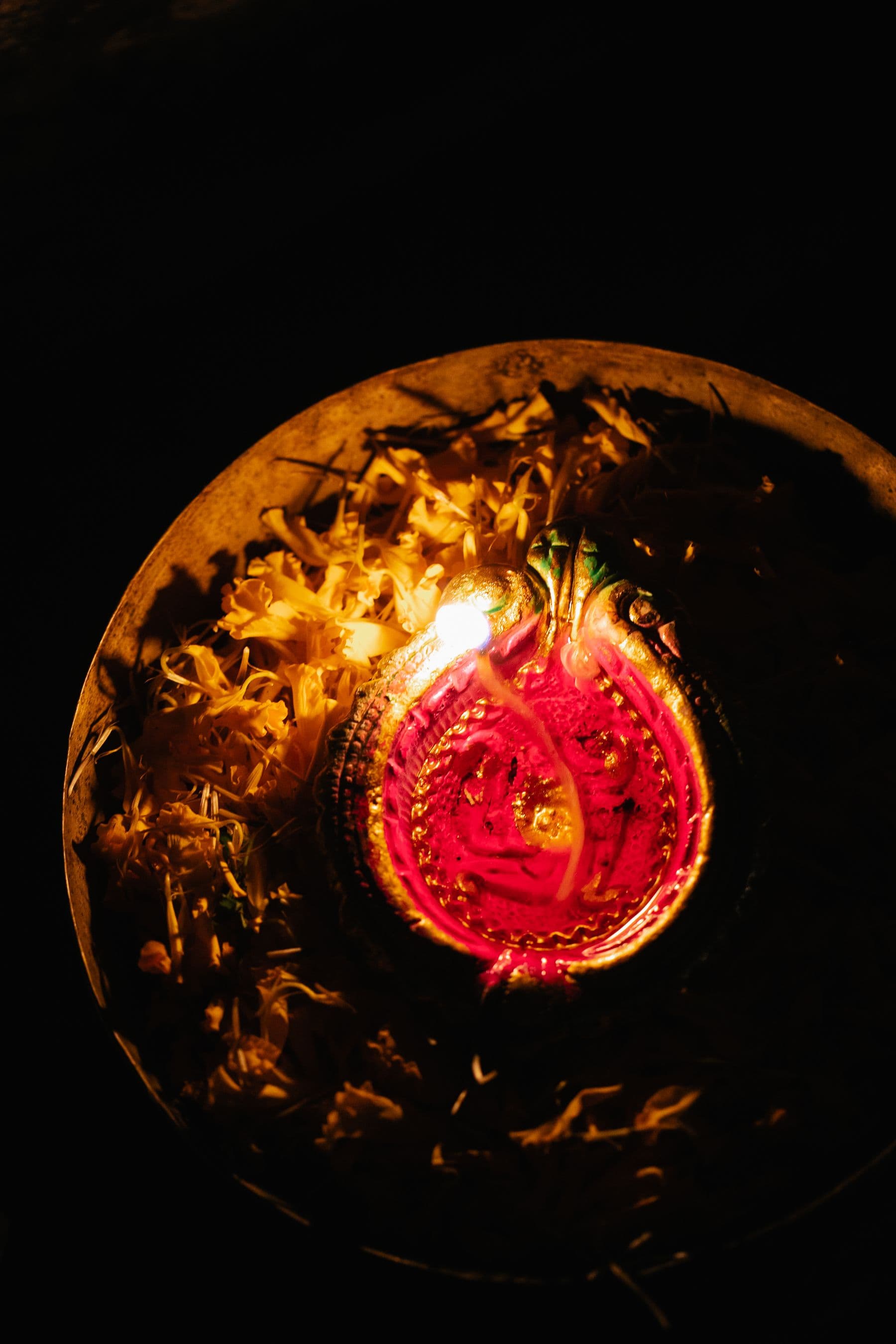
A murti or framed image, a diya, an incense holder, a small bell, a water vessel and a thali for offerings. That is sufficient. An altar accumulates over years; it does not need to start full.
Keep stationery, keys, phones and anything unrelated off the surface. The discipline of the empty space is part of the practice.
Daily care
Wipe the surface each morning before lighting the lamp. Change the water daily. Remove wilted flowers the same day rather than leaving them. The altar is maintained, not decorated.