



5 min read
Five days, five meanings
Diwali is not one festival but five consecutive days, each with its own observance. Dhanteras opens it with the purchase of metal for the home. Naraka Chaturdashi follows, marking the defeat of what obscures clarity. Lakshmi Puja sits at the centre. Govardhan Puja honours the earth that feeds us, and Bhai Dooj closes the week with the bond between siblings.
Treating the whole week as one long celebration misses the structure. Each day asks something specific.
Why the lamp, and not the lantern
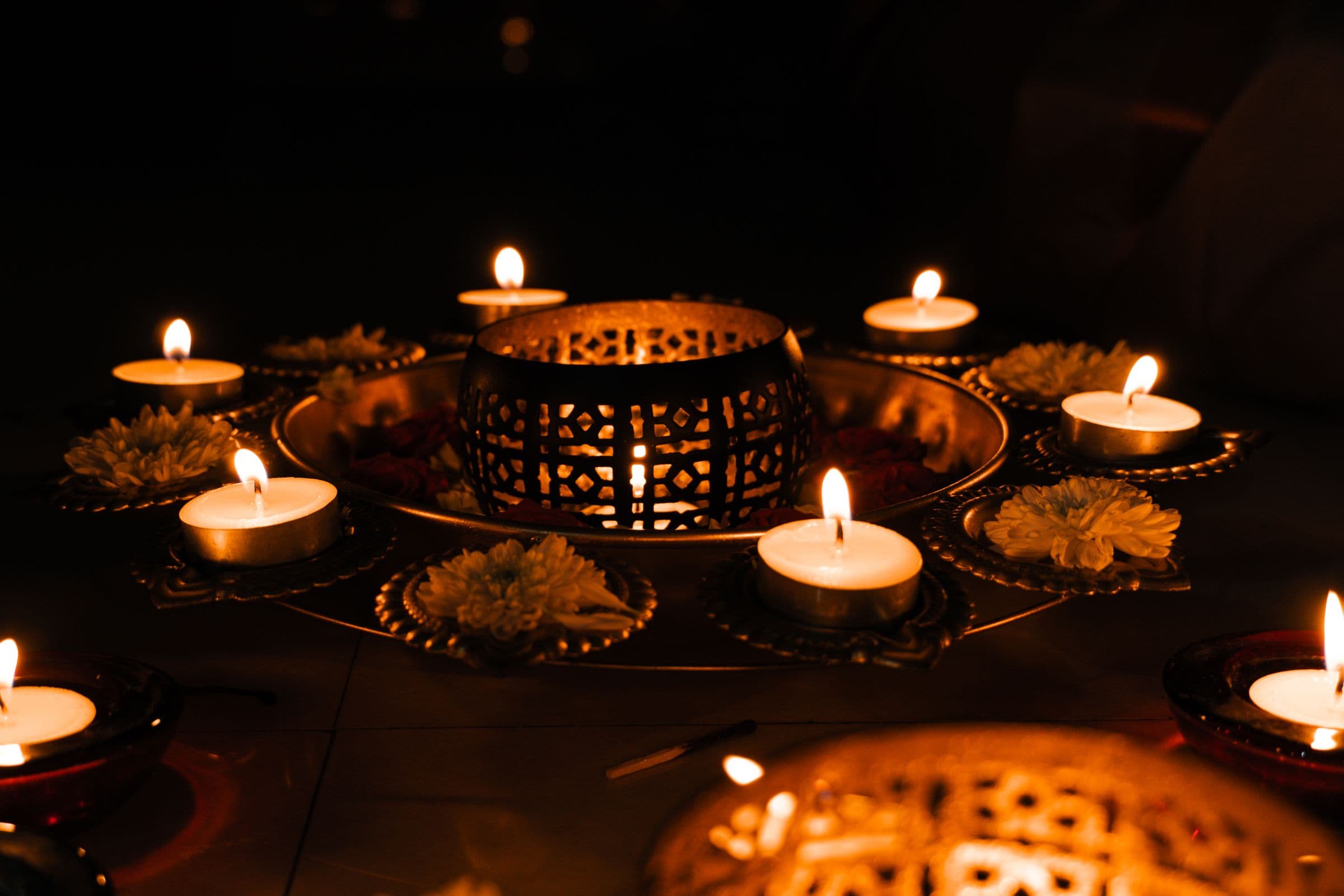
The diya is deliberately small. It does not illuminate a room; it illuminates its own immediate surroundings, and it needs tending. That is the point. The tradition is not asking you to floodlight the darkness but to take responsibility for one small circle of it.
A row of them along a threshold is the same idea repeated: many small lights, each individually maintained, together making a house visible from the road.
Beginning again
For many communities Diwali is also the start of the financial year — books are closed, debts settled, new ledgers opened. The spiritual and the practical are not separated. Cleaning the house, clearing what is owed and lighting the lamp are the same gesture at different scales.